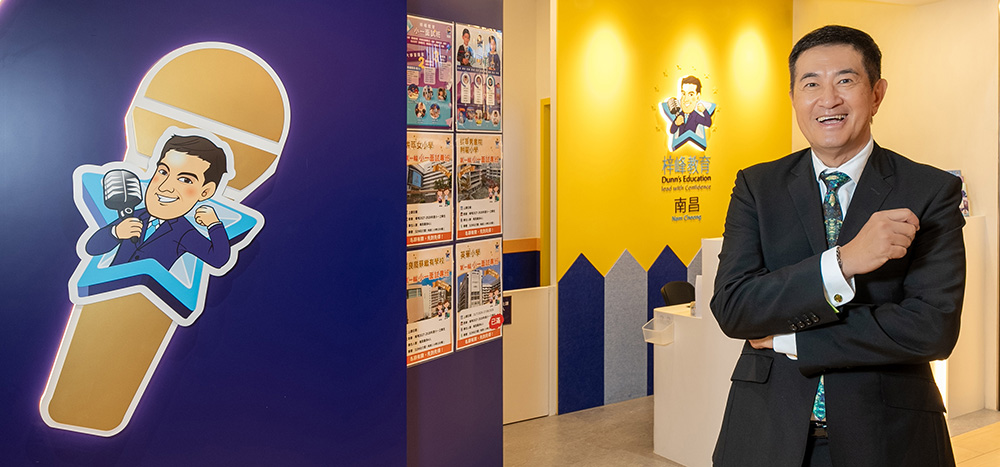
In an age of AI, smartphones, and online learning, Dunn’s Education combines technology with direct human interaction to help children develop confidence, communication skills, and independent judgement.


For Dunn’s Education, preparing children for the future means more than helping them perform well in examinations. Its programmes are designed to give children regular opportunities to speak, listen, think, collaborate, and respond to unfamiliar situations. Since 2009, the organisation has combined small-group teaching, creative activities, school interview preparation, language learning, and performance-based exercises so that children can practise these abilities in practical settings.
This approach is especially relevant as children grow up with more information and more digital tools than previous generations. Smartphones, online classes, video platforms, artificial intelligence, and social media make learning resources easier to access, but they also create challenges for concentration, judgement, communication, and emotional development.

Dunn’s Education does not reject technology. Instead, it uses digital tools where they support learning while keeping teachers responsible for observation, encouragement, feedback, and communication with parents. At the centre of this mission is Mr. Patrick Dunn (鄧梓峰), CEO of Dunn’s Education. A public speaker, emcee, and educator, Mr. Dunn argues that children should learn to express themselves rather than rely on memorised answers.

Mr. Patrick Dunn (鄧梓峰), CEO of Dunn’s Education

“In today’s competitive environment, it is important for children to learn how to become capable, thoughtful, and expressive individuals — people who can face unfamiliar situations and communicate with confidence rather than memorise standardised answers.” – Mr. Patrick Dunn (鄧梓峰), CEO of Dunn’s Education


Building Communication in a Digital Age

Reflecting on the changes he has observed since the COVID-19 pandemic, Mr. Dunn notes that many children became accustomed to online lessons and spent prolonged periods in front of computers and mobile phones. He believes that the effects can extend beyond screen time itself. Some children may find it more difficult to communicate directly with others, maintain eye contact, or express themselves naturally in unfamiliar situations.

“Many children no longer feel confident making direct eye contact,” Mr. Dunn explains. “As a result, what we might call the ‘human touch’— the sincerity and personal connection that underpin meaningful communication — has disappeared.”

For Mr. Dunn, face-to-face communication is not a superficial social skill. Eye contact helps people recognise emotions and moods, perceive sincerity, and understand how their words are affecting someone else. These qualities are difficult to reproduce through a screen, yet they are essential for building relationships, conducting interviews, working in teams, demonstrating leadership, and navigating everyday life.
Dunn’s Education addresses these needs through activities that ask children to introduce themselves, discuss their experiences, ask questions, listen to other viewpoints, and respond without relying on a fixed script. The aim is to help children become more comfortable expressing ideas and adapting their communication to different situations.The digital environment also presents a challenge of a different kind: the sheer amount of information available online. A single search can produce thousands of links, opinions, and answers, but access to information does not guarantee accuracy. Children need to learn how to question, compare, and evaluate what they see rather than accept every result as fact.

“It is not enough to know how to find information. You must also know how to analyse it,” says Mr. Dunn. “Does it match what you have learned? Is it consistent with what you have heard before, or is it significantly different? If it is different, is it new information or incorrect information? We must learn to exercise self-control when choosing information rather than allowing information to control us.”

Mr. Dunn says the same principle applies to adults. He uses AI himself, but considers whether the information it generates is useful, reliable, or incomplete. For parents and educators, the implication is that children need analytical ability, emotional awareness, and confidence in addition to knowledge. They should be able to use technology without losing the human qualities that allow them to connect with others.


A Legacy of Trust 

Dunn’s Education places individual development at the centre of its teaching approach. Rather than relying on one-size-fits-all instruction, the organisation uses small classes, close observation, and regular communication with parents. Its School Interview programme highlights a 1:6 teacher-to-student ratio, structured preparation and simulation stages, online support for families, and communication with parents after each lesson. According to Dunn’s Education, more than 80 per cent of students are referred by former parents or teachers. Teachers observe children closely, identify their habits and areas for development, and provide parents with an individual debrief after class. A child may need more confidence, a greater willingness to express an opinion, or additional support in handling unfamiliar situations. This feedback gives parents a clearer understanding of what happened in class and how their child is progressing.

The company’s School Interview Class reflect this approach. Mr. Dunn rejects the practice of teaching children to memorise model answers because a rehearsed response may fail when a school asks an unexpected question. This turns school interview preparation into a broader exercise in communication and self-understanding. Alongside interview skills, children work on manners, logical thinking, creativity, cooperation, adaptability, problem-solving, general knowledge, and the ability to organise their thoughts. These skills can support them not only in school interviews, but also in classrooms, friendships, extracurricular activities, and future professional settings.The centre’s Emcee Class follows a similar philosophy. Through imaginative topics and performance-based activities, children practise confidence, public speaking, discussion, expression, social skills, leadership, logic, concentration, exploration, and critical thinking. They are encouraged to use their voices, develop ideas, and become more comfortable presenting themselves in front of others.


A Future Built on Human Connection

Mr. Dunn describes Dunn’s Education as a team that continues to learn and improve. Teachers, curriculum planners, and administrative staff work together to refine courses, develop new themes, and respond to children’s changing needs. “The secret is that every teacher, as well as the people working behind the scenes in planning and administration, works very hard to improve what we do. In reality, we are learning every day,” he explains.
The company’s plans for 2026 combine new tools with the same emphasis on human teaching. Dunn’s Education is developing AI-assisted animations and lesson materials to make classes more engaging and help children maintain focus. It also plans to share selected educational content through social media platforms such as Threads and Instagram, including material about manners and everyday knowledge.
Technology is being used as a support rather than a substitute for teachers. AI can help the organisation streamline administration, prepare materials, and create more dynamic classroom experiences, while teachers remain responsible for observing children, encouraging them, and communicating with parents. The central goal is to make learning enjoyable so that children are more likely to concentrate, participate, and retain what they learn. As Mr. Dunn puts it, “Today, what we need to teach children is how to learn something and then express what they have learned.”
In July 2026, Dunn’s Education opened a new branch at V Walk Mall, above Nam Cheong MTR station, extending its services to families in one of Hong Kong’s growing neighbourhoods. The new location adds to the organisation’s network of branches and makes its programmes more accessible to children across the city.

The Mediazone Group congratulates Dunn’s Education on earning the Hong Kong’s Most Valuable Companies 2026 award. The recognition highlights the organisation’s continued work in developing children’s confidence, communication skills, creativity, and independent thinking through structured, activity-based learning.
Parents interested in learning more about Dunn’s Education’s programmes, including the Emcee Class, School Interview Class, English, and Putonghua Oral Classes, can visit its official website: http://dunn.hk.